The butt (of your charger) matters
What's the difference between these two butts?
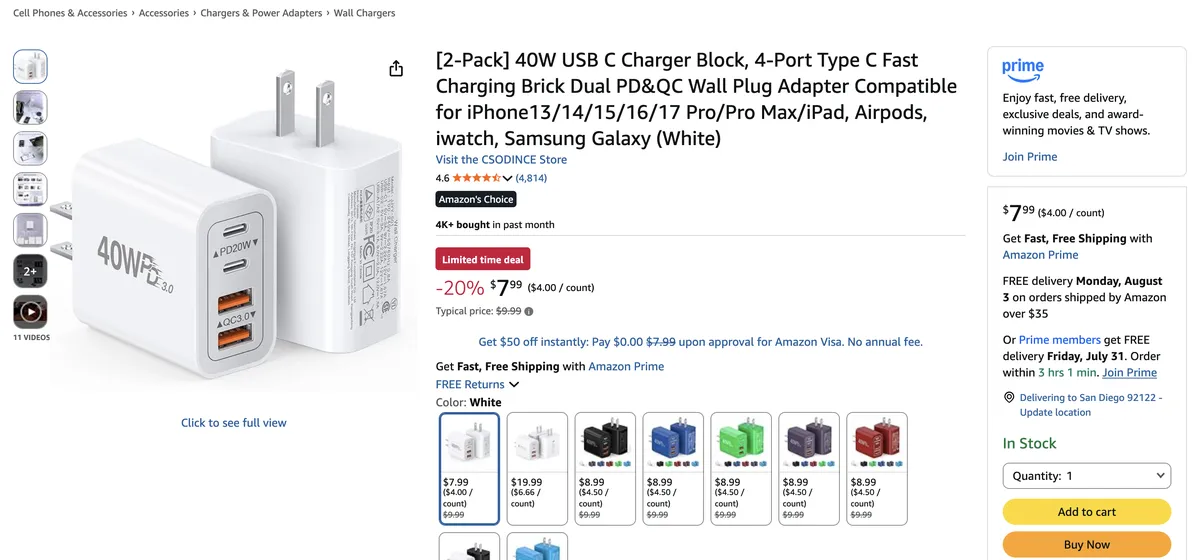
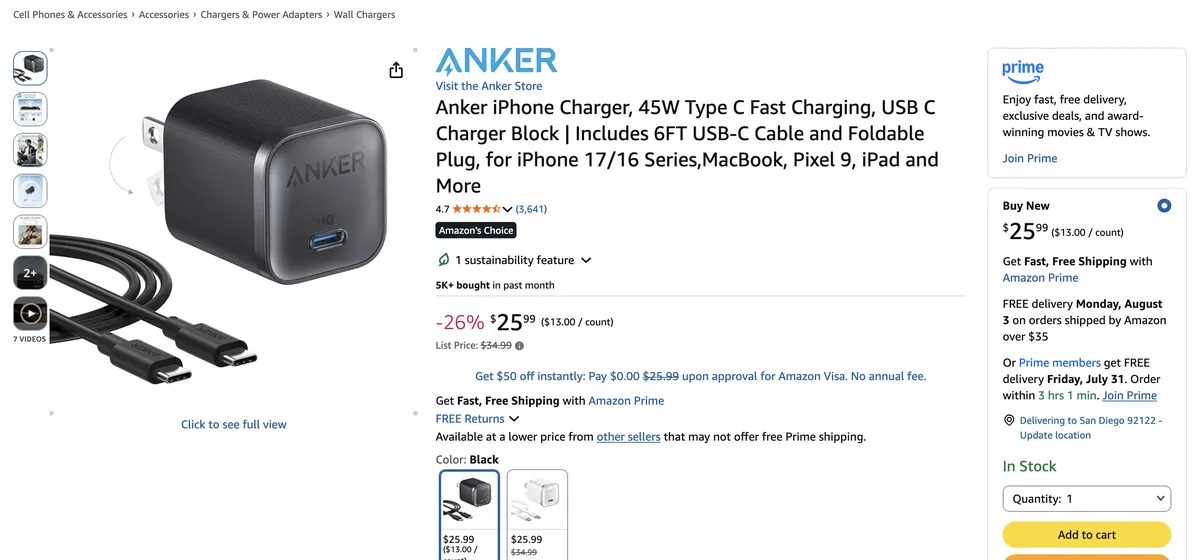
They do the same thing right?

Power adapters (butts) seem like simple devices. We take them for granted. However the butt you choose could mean the difference between a proper fast-charge and a rapidly degraded battery, a literal house fire and a safe shutoff during a voltage surge.
Consider what the butt must do:
- It plugs into a wall outlet which delivers a high, fixed AC voltage (120V in the US, 230V in most other places) that has to be converted into whatever low, precise DC voltage your device wants.
- If the device supports fast charging, it needs to negotiate the right voltage/current combination via the USB Power Delivery protocol.
- It needs to hold steady at that voltage - the device does the pulling, up to the current limit they agreed on.
- It needs to shut itself off if it detects an unsafe voltage, current, or temperature
All those things, in my mind, are critically important in delivering a safe amount of power. So, in a market crowded with butts, why are some butts cheaper than others? This Kenn Shirriff blog post has a beautiful breakdown. In summary, generic branded butts can be found to cut corners, remove safety mechanisms, and not actually deliver their rated voltage/current.
Unfortunately for the consumer, it's hard to look at an individual butt on Amazon and qualify its credentials & capability. You'd have to break open the butt to know for sure. So why take the risk? Don't skimp here. Purchase the butt with the good brand name, the one that is third-party certified.
Choose carefully. Mind the butt.